
The evolution of the Great Highland Bagpipe in America has deep historical roots. Scottish migrants who settled in the Appalachian region during the 18th century brought with them musical traditions that have heavily influenced American folk, bluegrass, and country music. Initially a solo instrument, bagpipers were formed into military-style bands in Scotland in the 1850s. The trend crossed the Atlantic, transforming the bands into a prominent staple of American civic parades and Highland games.
Scottish pipe bands have come to symbolize both historical heritage and civic duty in American culture. They have grown from ethnic celebrations into becoming mainstays of police and firefighter ceremonies and rituals. Today, they continue to serve as community ensembles that preserve Scots’ traditions through lessons, participation in local parades, and Highland festivals.
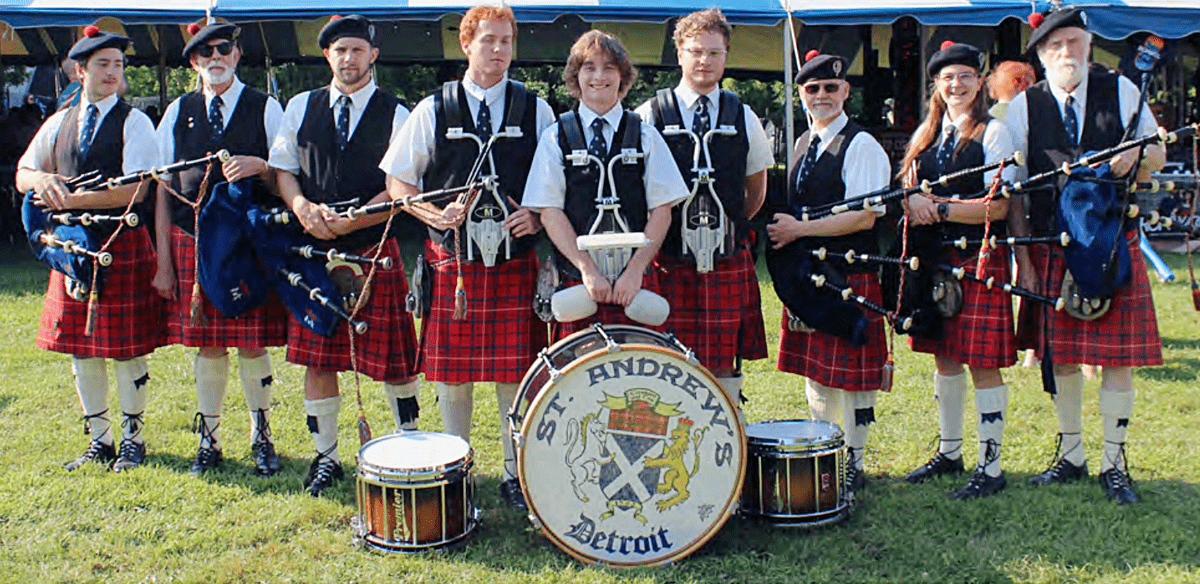
The Saint Andrew’s Pipe Band
In 1952, Walter Steward Rose, a professional-level piper, began teaching the highland bagpipe to the sons of members of the St. Andrew’s Society of Detroit.
Within a few years, there were enough players to form a band. The group has gone on to make a mark in the band competition world, winning many prizes. Individual members are consistently successful in solo contests. Thanks to the tutelage of Walter Rose.
Walter passed away in 1966. At that time, the senior piper, John M. Goodenow, assumed the duties of Pipe Major. The band had continued success under John’s leadership, with the aid of many of the senior pipers in the group.
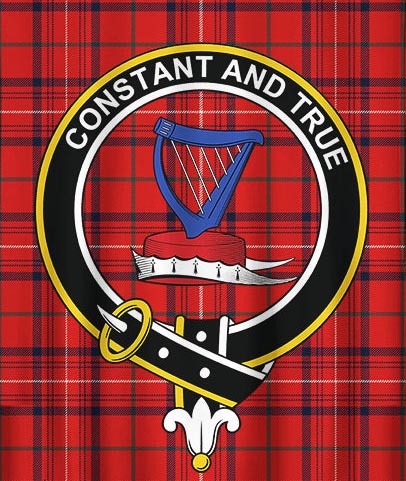
To honor Walter’s legacy, the pipers chose the Rose Clan tartan as their colors. The clan’s motto, “Constant and True” is also consistent with the mission and vision of the Saint Andrew’s Society of Detroit — Benevolence, Patriotism, and Fellowship.
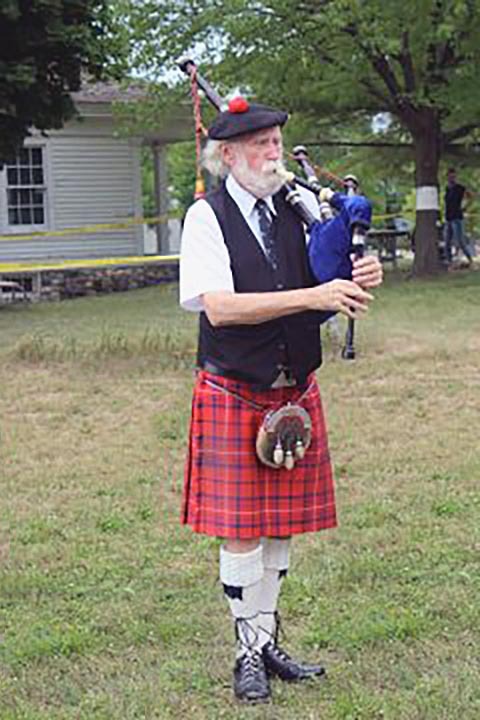
The band occasionally competes as a group, but individual members are frequently successful competitors in solo contests. The band performs at memorial services, civic parades, and Highland gatherings in the Detroit Metro area, as well as at St. Andrew’s Society of Detroit events.
The band is the most visible outreach program of the St. Andrew’s Society, raising awareness about the Society and the pipe band tradition. They practice weekly at the Kilgour Scottish Centre in Troy, Michigan. The group is very proud of its 65+ year association with the Society.
At no charge, the band will teach children to play the bagpipes or drums and help them progress into full membership in the group. They also have close relationships with the best highland dance teachers in the area. Any families with children interested in these Celtic arts should contact the band at: pipesanddrums@detroitscots.com