
The History of Shortbread
 The story of shortbread begins with the medieval “biscuit bread”. Any leftover dough from breadmaking was dried out in a low oven until it hardened into a type of rusk: the word “biscuit” means “twice cooked”. Gradually the yeast in the bread was replaced by butter, and biscuit bread developed into shortbread.
Shortbread was an expensive luxury and for ordinary people, shortbread was a special treat reserved for special occasions such as weddings, Christmas, and the New Year. In Shetland, it was traditional to break a decorated shortbread cake over the head of a new bride on the threshold of her new home. The custom of eating shortbread at the New Year has it’s origins in the ancient pagan Yule Cakes which symbolized the sun. In Scotland, it is still traditionally offered to “first footers” at the New Year.
Shortbread has been attributed to Mary, Queen of Scots, who in the mid-16th century was said to be very fond of Petticoat Tails, a thin, crisp, buttery shortbread originally flavoured with caraway seeds.
There are two theories regarding the name of these biscuits. It has been suggested that the name “Petticoat Tail” may be a corruption of the French petites galettes (“Little Cakes”). However these traditional Scottish shortbread biscuits may in fact date back beyond the 12th century. The triangles fit together into a circle and echo the shape of the pieces of fabric used to make a full gored petticoat during the reign of Elizabeth I. The theory here is that the name may have come from the word.
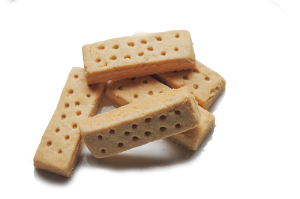
Shortbread is traditionally formed into one of three shapes: one large circle divided into segments (“Petticoat Tails”); individual round biscuits (“Shortbread Rounds”); or a thick rectangular slab cut into (“Fingers”.)